Bridging the Gap - Connecting Ranchers to Sustainability
Post by Clemson student Oliver Zerrillo

The grasslands of southern Phillips county Montana hold immense potential for ecological conservation, and from an outside perspective there may seem to be an easy way forward. Before being here I had a very idealistic view of this landscape, believing that it would be so simple as to re-introduce the species that once dominated the area en-mass without any understanding as to the challenges of this or understanding of why the pushback could be so fierce. Now I understand more, there is not only concerns of ecological conservation to be mindful of, there is also the matter of cultural conservation, in particular of ranching and “cowboy” culture. Due to the complexities of the relationship between ranching and ecological conservation, implementing sustainable practices on the landscape comes with social challenges.
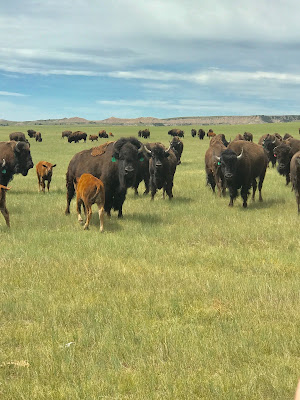
Historically this landscape would have been filled with prairie dog towns and roaming bison, and some groups, such as American Prairie (AP), are putting in steps to help return portions of the landscape to this state. Ecologically this has clear benefits and rationale behind it, and for many people throughout other parts of the country this seems to be a clear path forward. AP’s work is restricted to lands that they own and have a right to, and they state that they only purchase land that is already for sale, with no pressure towards ranchers to sell. However, it is clear once you enter the area that their social sway is on the lower end, with some mentalities towards them seeming even hostile from ranchers. The rationale behind this becomes clear upon speaking with a rancher, they need to work to live, and their families have been working the same way for centuries, they neither want to change nor is it fair to force them to.

In the modern age, one of the main driving forces that shapes the landscape are cattle, and cattle ranching. Cattle operate somewhat similar to bison but when managed in a traditional way, are not exactly what would be considered “sustainable”. However, it is a large industry in the area, and many families rely on their ranches. This is where the conflict between ranching and conservation arise from; the cows need the same land and grass as the wildlife. Luckily in modern times, organizations such as the Ranchers Stewardship Alliance (RSA), and The Nature Conservancy (TNC), through places such as their Matador Ranch, help to bridge this gap. TNC provides incentives for ranchers to implement sustainable practices at their home ranches in return for discounted rates for rights to graze at the Matador. The practices can be as varied as changing out old fences to be more wildlife friendly, to keeping prairie dog towns on their ranches. Alongside this, RSA gets ranchers connected to programs through which they can receive incentives to integrate sustainable practices. In my opinion this is what sustainability looks like in this part of Montana, actions that can benefit both wildlife, and ranchers. Thanks to advances in science this is now a realistic reality, as fences get improved to help pronghorn, and grazing patterns altered to allow for grass recovery and protection of prairie songbird habitat.
After visiting this place it now has a new meaning to me, whereas before this area, in my mind, mostly stood for unrealized potential with regards to wildlife conservation, it now has a much deeper meaning to me. In my mind it now stands as an example of how the best way forward for sustainability is to search for ways to integrate sustainable practices into the lives of everyday people, as opposed to at the expense of them. Because of this, in my opinion, successful sustainability in this area is being best represented by TNC at the Matador Ranch, and by RSA. I have a respect and appreciation for the actions that AP is taking, and think that someday there may be a stronger place for it. However, I fear that it is not the most efficient way forward as having the local community be opposed to or indifferent is not nearly as effective, or efficient as integrating the local community into the solution themselves.
Overall, the potential for ecological conservation and sustainability across this landscape is immense, and the parties involved may not be so opposed to each other as it seems at first glance. Many of their goals actually do align, it is merely a matter of finding a path towards them that all parties can get on board with, and once that happens, I believe the prairies will see immense strides in the right direction.