Do Ranchers Dream of Virtual Cows?
Post by Clemson student Katie Ostergaard

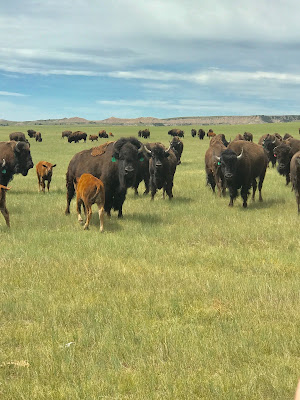
Technology has always been changing the way ranchers live and work. Ranching has always relied on strong fences, hard work, and traditions, with sustainability becoming a bigger priority for the industry. Ranchers have begun to think differently about their techniques and practices in a wide variety of ways. So, what does sustainability mean in agriculture? It is impossible to have a single answer to that question. Every rancher, conservationist, and agency has a different idea of sustainability with a different plan to implement it. However, everyone can agree that sustainability in agriculture means being economically productive in a way that protects the land’s natural resources. We had the opportunity to experience a few different ways that ranchers are moving towards sustainability within their lands and their herds. One of the most common ways to improve sustainability is through creating wildlife-friendly fencing. This includes increased visibility using flagging, a smooth wire for the top and the bottom, and giving space for wildlife to slip under the fence. This is important because fencing can block wildlife from finding food or water and even impede migration in mule deer and pronghorn. What if a rancher did not even need internal fencing? This may sound unfeasible with cattle running throughout the entire ranch with no control, but virtual fencing provides a new type of boundary for cattle. A rancher who uses virtual fencing has the ability to control their pastures at the click of a button. One rancher in Montana is utilizing this technology with his 300 head herd of Angus, Red Angus, and other influences with success.
Through all the ranches we visited, the idea of virtual fencing stood out to me. Seeing it in action makes me reconsider what sustainability can look like in agriculture. For the small South Carolina herds I have personally worked with, virtual fencing could be a useful management tool. Since most farms in South Carolina had 20-99 cows, according to the 2022 Census of Agriculture, management of these herds is personal and contained. However, when implemented in Montana, the scale is completely different. Many ranchers manage herds of hundreds and sometimes up to one thousand cattle across huge landscapes. On this scale, virtual fencing offers ranches a way to completely change the way cattle are managed. Using it can break up boundless land into tight sections that allow ranchers to manage controlled rotational grazing without using physical barriers. Virtual fencing is a cutting-edge technology that can offer ranchers an easy way for better land management, conserve waterways, and benefit wildlife and biodiversity.
While virtual fencing may seem like a strange concept, it works like an electric fence for a dog. The cattle wear collars that the rancher can use to set boundaries through their phone. If they wander too close to the boundary, they will receive a series of warning beeps and a low-energy pulse when they reach the edge of their virtual fencing.
Virtual fencing provides ranchers with an easier and more effective way to manage their land. Traditionally, cattle would be moved into new pastures through tremendous time and effort. Virtual fencing makes this process seamless and convenient for one person to complete by clicking a button. The rancher can make a new pasture on their phone and move the cattle instantaneously. This allows the rancher to use very precise rotational grazing and gives grasslands and soil time to recover. The cattle benefit from improved grazing conditions, and the rancher benefits because their land stays productive and sustainable for years. Sustaining cattle and grasslands is the key to keeping the ecosystem healthy and preventing overgrazing.

Another benefit of virtual fencing is the ability to conserve waterways and protect riparian areas. When cattle gather near streams, ponds, or other bodies of water, they can damage the banks and pollute the water. Water is an incredibly valuable resource in Montana, and protecting it is crucial for livestock and wildlife. Virtual fencing can create boundaries around the water without building permanent barriers that can affect everything around it. Cattle can still have access to fresh, clean water without damaging the area and giving ranchers flexibility in their pastures. Virtual fencing gives ranchers a manageable way to balance the needs of their cattle with the delicate resources they use.
Finally, virtual fencing can benefit wildlife and biodiversity by removing physical barriers that can slow migration and change the landscape. Barbed wire fences can affect migration routes for many species and limit access to food and water. Many species evolved with wide open spaces and struggle to thrive when faced with miles and miles of fences. Additionally, better land management through precise rotational grazing promotes biodiversity in the landscape. Healthier grasslands create stronger ecosystems and promote native species.
There are many stakeholders involved in how the land is managed. Ranchers depend on it for their livelihood and economic stability. Conservationists seek to protect the land and wildlife populations. Indigenous communities have a deep historical and cultural ties to the land. Wildlife relies on a healthy landscape for their survival. All of these groups value the land in a variety of ways which can lead to conflicts.
Conflicts in land use often come from competing needs. For example, cattle grazing can overlap with wildlife migration routes or sensitive ecosystems. Traditional fencing can restrict wildlife movement, while unmanaged grazing can damage land and waterways. Virtual fencing helps reduce some of these conflicts by allowing more flexible and responsive land management. However, it still requires careful planning and cooperation between stakeholders to make sure land is being used responsibly and sustainably.
Before learning about virtual fencing, I thought improved fences and rotational grazing were the key to sustainability. I realized that virtual fencing has the ability to change the relationship between ranchers and the land they manage. It allows for flexibility and fewer barriers but increases accessibility and ease of management. Ranchers in Montana face a wide variety of challenges, but improvements in technology have the potential to reshape the future of ranching. While ranching will always rely on hard work and tradition, seeing virtual fencing makes me excited to see new possibilities and new innovations in agricultural sustainability.