Finding the Modern Cowboy in Montana’s Prairie Land through Conservation
Post by Clemson student Riley Brennan

When most people think of a cowboy, they picture a person on horseback moving cattle across open rangeland. Before taking this course, that image largely defined what I thought ranching still looked like. However, after visiting several ranches and learning about different management approaches, I began to realize that the modern cowboy are much more complex. Today's ranchers must balance tradition with new technology while managing livestock, natural resources, wildlife, and economic realities. This raises an interesting question: Is the traditional cowboy still alive, or has technology changed ranching so much that the cowboy has disappeared?
One example of modern ranching was seeing cattle fitted with halter-style tracking collars at the Barthelmess ranch run by Leo. These collars allow ranchers to monitor and move cattle using technology rather than relying solely on riders and horses. At first, this seemed very different from the traditional image of a cowboy. Yet the purpose remains the same: managing livestock efficiently across large landscapes. The technology helps ranchers know where cattle are located, improve grazing management, reduce labor costs, and respond more quickly to problems from even the comfort of their own home. During dinner Dr. Jachowski asked Leo if he needed to move his cattle and Leo responded with, “We will see I guess I could do it again.” Instead of hours of preparing for horseback movement all Leo must do is hit a couple of buttons on his phone and the cattle move to a new area to graze. In this way, technology is not replacing ranchers but giving them new tools to accomplish the same goals.

The use of these collars also relates directly to sustainability. Agricultural and natural resource sustainability requires balancing production with the health of the land. Here in Montana, they have a huge focus on restoring grassland prairies for conservation of many different species. By knowing where cattle spend their time, ranchers can prevent overgrazing, distribute grazing pressure more evenly, and protect sensitive habitats. This benefits both livestock production and the long-term health of the ecosystem. The technology demonstrates how science can contribute practical solutions to help sustain both agricultural operations and natural resources.
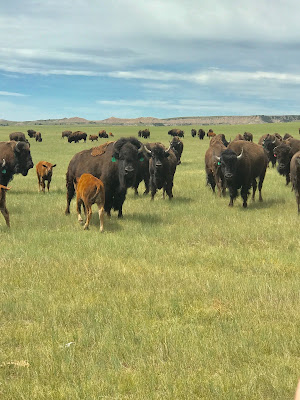
At the same time, I also witnessed ranching practices that looked much more traditional. The Matador Ranch, operated by The Nature Conservancy, showed how traditional cowboy culture remains alive. During roundups, ranchers still gather cattle using horses and many of the same techniques that have been passed down through generations. Hearing from Jason and Kelsey on this process made it clear that ranching is not simply a business but also a cultural tradition deeply connected to the landscape.
What stood out to me at the Matador was the way multiple objectives were brought together to create a grass bank. The ranch is managed not only for cattle production but also for wildlife habitat, native grasslands, and ecosystem health. Different stakeholders include ranchers, conservation organizations, wildlife managers, and local communities which often have different priorities. Ranchers depend on the land for their livelihoods, while conservation groups seek to preserve biodiversity and ecological processes. Sometimes these goals can conflict, but the Matador Ranch showed that they can also complement one another when management is based on science and long-term planning. This is so interesting to me and ultimately why I thought the Nature Conservancy model was the best for the future of conservation. They don’t just focus on conservation but also include the social aspect which here in Montana is very important because some people have strong opinions on aspects of conservation.
The question of whether the traditional cowboy is still alive depends on how we define a cowboy. If we define a cowboy solely as someone who rides horses and manages cattle exactly as ranchers did in the past, then the role has certainly changed. Modern ranchers use GPS technology, tracking collars, data analysis, and scientific research to make management decisions. However, if we define a cowboy as someone who works closely with livestock, understands the land, and adapts to challenges while stewarding natural resources, then the cowboy is very much alive.
I now see that sustainability is not about preserving the past exactly as it was. Instead, it is about sustaining the land, the people who depend on it, and the ecosystems that support both. Technology and tradition are often presented as opposites, but hearing from ranchers and conservation specialists showed that they can work together. The modern cowboy may use tools that previous generations never imagined, but the fundamental responsibility remains the same: caring for the land while producing food and maintaining a way of life.
Ultimately, the future of ranching will depend on this balance between innovation and tradition. The landscapes we visited have been shaped by people, livestock, wildlife, fire, and natural processes for generations. The challenge moving forward is to use science and technology in ways that strengthen, rather than replace, the knowledge and values that have long guided ranching communities. In that sense, the traditional cowboy is still alive not as a relic of the past, but as an evolving steward of agricultural and natural resource sustainability.