More Than Cattle: The Wildlife That Shapes Montana
Post by Clemson student Kaydin Knight

During my first four days in Montana, we met with individuals from a variety of backgrounds who all had different perspectives on conservation and land management. We met with Dr. Danny Kinka from American Prairie, Leo Barthelmess, who is the former president of the Rancher Stewardship Association, representatives from The Nature Conservancy, and researchers studying different prairie species such as Natilie and Jessie. Although their viewpoints on bison, prairie dogs, and wildlife management varied, they all shared one common goal which is restoring native grasslands and improving the ability of wildlife to move more freely across the landscape.
These conversations showed that sustainability in Montana is not always defined the same way, especially when discussing species that influence both ecosystems and agricultural production. One of the topics that stood out during our discussions were the different perspectives ranchers have on prairie dogs. Their opinions often seemed to depend on how they were raised and their experiences with land management. Some ranchers believe prairie dogs reduce available nutrients and grass for livestock, especially during drought years. However, studies done in recent years have explained that prairie dog activity can also increase the nutritional quality of grasses in certain conditions. Prairie dogs also play an important ecological role and support at least 100 other species, including the Burrowing Owl and the Black-footed Ferret, which depend heavily on prairie dogs. Approximately 90% of the Black-footed Ferret's diet comes from them.
As a rancher, Leo Barthelmess appeared to have a more tolerant view of prairie dogs than some others. He explained that, in his experience, prairie dogs did not significantly reduce the available grass or nutrition for cattle because they mainly occupied the “bad” or less productive parts of his land. American Prairie has also developed the Wild Sky Ranching Program, which encourages ranchers to adopt wildlife-friendly practices while continuing sustainable cattle grazing.
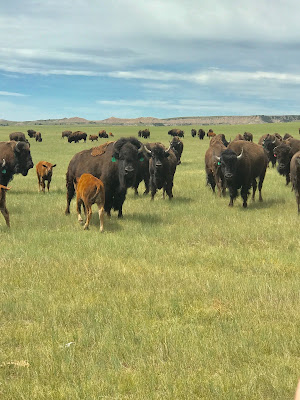
Bison were another important but controversial topic discussed throughout our time in Montana. While many conservation groups support bringing bison back to their historic areas, not all ranchers agree. Larger organizations and even other ranchers avoid expanding restoration efforts for fear of losing support from surrounding ranching communities. Many ranchers worry that bison would compete with cattle for resources such as grazing land. Another major concern discussed was the risk of disease transmission, especially brucellosis, since ranchers fear an outbreak could lead to major financial losses through herd liquidation that could cost thousands
or even millions of dollars. Opinions on bison restoration also seem to be influenced by the strong cultural traditions of ranching in Montana, where land management practices are often passed down through generations. Most ranchers are hesitant to support restoring key stone species such as bison because they believe these changes could negatively affect their operations and way of life. While others are trying to find a balance between conservation efforts and sustainable cattle production.

Pronghorn antelope were also mentioned several times in conversations throughout the trip. Many wildlife conservation organizations are encouraging the use of wildlife-friendly fencing to better support pronghorn movement. Which is not over 42 inches from the ground, while also using a smooth wire that is 18 inches above the ground. Pronghorns are among the longest migrating land animals in North America and can travel up to 500 miles round trip. Improving fencing systems helps reduce barriers and allows these animals to continue their natural movement across the landscape.
Before coming to Montana, I thought sustainability meant trying to protect wildlife. Now after talking with everyone here, I realized sustainability in Montana also means maintaining livelihoods and cultural traditions while also trying to restore the ecosystem. Although different organizations and landowners may have different approaches, they all share the goal of maintaining both ecological health and working landscapes. Sustainability is not about sustaining one species or one industry but sustaining ecological function and keeping communities together. Montana was shaped by its native grasses, key stone species, and the cowboys who depended on the land. Today, Montana is shaped by ranchers, communities, and organizations like The Nature Conservancy that continue to restore these landscapes. The future of Montana will likely depend on cooperation between conservation groups and local communities to balance ecological restoration with agricultural needs.
To me, Montana is shaped by its wildlife. Many species continue to decline due to habitat changes and the loss of keystone species. I believe these native animals deserve to remain an important part of the landscape. I do also recognize the important role ranchers play in Montana’s identity and future. Science also plays a major role in protecting Montana’s ecosystems. Research on prairie dogs and disease management, including the use of insecticide dusts such as deltamethrin, has helped prevent population declines. Protecting prairie dogs is important because they are a key species that supports many other animals across the prairie ecosystem.