The Modern Cowboy… Conservationists?
Post by Clemson student Sarah Anne Horne

Different organizations. Different views. Maybe even different definitions of sustainability for Montana. But one common goal. To restore Montana into the way that it was only a few hundred years ago.
Coming into this week I knew that I was going on our university trip to learn about different conservation practices in Montana, but did not expect to jump into such an extensive social, scientific, and political scene and talk with so many passionate scientists and ranchers who are dedicating parts of their lives towards Montana grassland restoration.
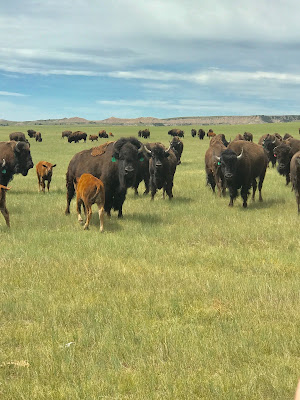
Walking into the American Prairie Organization and talking with Dr. Daniel Kinka I realized the stark threats that the American grasslands are facing. “94% of the grasslands today are human and livestock biomass, while only 6% are wildlife. There has been a 70% decrease in bird biomass in the past 50 years.” Their model of sharing public lands and buying land from selling ranchers to restore creeks, add in new vegetation, and take away fencing showed me their specialized focus on wildlife and vegetation sustainability through land acquisition. I couldn’t help but think as we left the center though, I wonder how this model affects the cultures of ranchers and their communities as land is given up that for so long has belonged to them?
A different approach, ‘the grassbank’ is a form of large scale community based conservation I learned as we discussed with two leaders later that day at the Nature Conservancy’s Matador Ranch. Their model looks to exchange grazing land with ranchers for implementing conservation practices on their property. It especially appeals to new ranchers looking for land as they are beginning to build their herds. It offers incentives such as lowered grazing prices for implementing practices such as keeping prairie dogs and putting in wildlife friendly fences. A combination of sustaining both the ranching culture and community. However, this model does come with the limit of land I learned. The Matador while working to make more grassbank ranches in other areas of Montana can provide grazing land for only 15 ranchers in the area and additionally appeals to only a subset of the ranching population. So what about other ranchers who can not participate in these grassbanks?
A possible answer to this question was given at our next stop. At Leo Barthelmess’s Ranch we met with three members of the Rancher’s Stewardship Alliance (RSA) Leo Barthelmess, Martin Townsend, and Maida Knapton. I learned about their work as a non-profit and instead of buying land from farmers or having farmers come to their land, they have a model of reaching out and working with ranchers using grant money to provide them with conservation programs such as replacing fencing and converting cropland to grassland. Working within three counties totaling nine million acres the alliance is looking at working with ranchers to make changes that will help them economically and also benefit wildlife. Leo discussed with us a new advancement he has implemented on his ranch called Halter. Halter is a virtual fence program that uses an app to move cattle allowing for easier management, more efficient rotational grazing among farmers, and some additional conservation benefits for the surrounding wildlife. However, this new program is expensive and a prime example of a challenge that ranchers face today. New technology that has the potential to help, but also to fail and cost them money, and the longstanding practices of the past that are tried and true but lead to a stagnancy when it comes to new conservation practices for wildlife in the area.

Looking around outside as we drive through northern Montana prairies, what a beautiful landscape. I think about each organization working towards making the prairie less endangered in different ways. American Prairie taking the land and really making what it was before any American stepped foot on it. Matador Ranch and RSA preserving the American ranching way of life, but implementing small changes to turn heads and get more ranchers involved. Their end goal being to make the land more sustainable for wildlife to live on and for their generations in the future to live in balance with each other.
I came in with the mindset of seeing which one of these organizations would be right and the others wrong, not being as effective in conservation progress. After meeting with each of these groups, I learned that this question is not so black and white with each organization holding different beliefs on the way that a sustainable Montana looks like. Leaving, I realized each one of these groups are just as important as the other whether working on a small or large scale, they are looking to meet needs in different ways whether that’s for just the wildlife and land or for the ranching community and the environment. These scientists and Montana ranchers are taking big steps to restore these endangered grasslands and giving new conservational connotations to the American cowboys of the west.