From Pasture to Plate and Back Again - How the Economics of Cattle Impact the Ecology of the Plains
Post by Clemson student Oliver Zerrillo

For the vast majority of my time here in Montana when I thought of the word sustainability I was mostly considering it in an ecological context. Cattle ranching does indeed have a context in ecological sustainability, but the resource of cattle also has a second context, one that affects most people more directly in their daily lives, the context of economic sustainability. At first thought you might think that those in the beef business don't need to be overly concerned with the sustainability of their market, after all beef famously takes a central role in American cuisine. However the processes and pathway by which that meat makes it from the ranch to your kitchen is actually much more involved, with a number of players involved.
The three main stops on the journey that we got to witness on this trip were; the ranch, stockering, and the feed lot. Each of these stops has influence on the others, and in turn all are influenced by the price of beef and cattle. We heard at a feed lot that when one group is prospering, it usually means another is struggling or having to eat a cost differential. This was what made me wonder for the first time as to what exactly makes this market so sustainable. Currently, prices are high. This is great for the ranchers as their cattle can fetch higher prices, but this means that stockers and feed lots pay higher prices. Presently, according to the feed lot manager we spoke to, the negative impacts from the raised prices at this point are still mostly held by the packagers, and ultimately the consumers, as they face rising beef prices. However, should this trend continue, it should eventually reach up the chain due to shifting demand trends as consumers seek out cheaper sources of protein once beef passes their acceptable price point.

This creates the same self balancing effect that can be observed in the economics of most products, as prices climb too high, demand drops, forcing the prices back down. However, interestingly in the case of beef right now the market does not seem to be slowing down, and decrease in total units purchase still seems to be covered by the increase in per unit price, as demand is still high enough to stave off a change in trends right now.
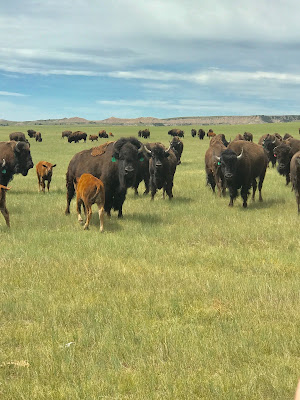
This creates an interesting situation in the sustainability of cattle as a natural resource. We have learned that cattle certainly can assist in the sustainability of environmental conditions here in the west as they fill the role that bison historically would have held on the landscape. But because of their status as a commodity, the presence of the natural resource of cattle on the landscape is dependent on their economy. In speaking with one of the instructors on this trip I learned that in some economic climates, the gender percentages of cattle sent to slaughter can change from being majority male to nearly even between males and females. This creates an issue, as when heifers begin to be removed from herds they take with them their ability to produce more cattle and replace lost numbers. This in turn can lead to shrinking herd sizes for a time. It is in this aspect where the economics of cattle are distinctly tied to the sustainability of the grasslands here in Montana, as if herd sizes are reduced enough it can lead to the new reduced amount of cattle being insufficient to handle the ecological responsibility that the landscape relies on them for. This results in a Montana where not just the people and practices, but the economy itself holds influence as to the sustainability of the plains.