Sustainability in the Northern Plains: Cattle Operations
Post by Clemson student Evelyn Trost

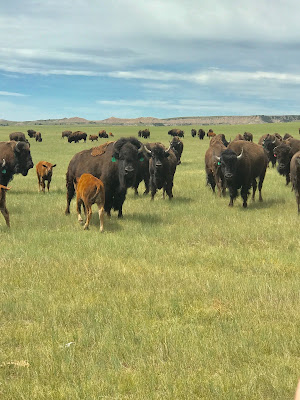
Montana and the Northern Plains are a major source of beef farming in our country. For the most part, it is cow calf operations - herds where Cows are used to produce calves and raise them until they are around 7 months of age. At that point, the calves typically go to a backgrounding or stocking operation, where they work through the hardship of the separation from mom cow, and build bone and muscle. Then, the cattle go to a finishing lot, where they are fed grain and fattened up, focusing on trying to get fat marbling throughout meat to get more prime cuts, which are more expensive meat cuts. In our class, we have been focusing on sustainability out here, mostly of the land, but also of the way of life, which pretty much revolves around livestock production - the cowboy way of life. On Friday, the 26th, we visited one of the only feedlots in Montana, Yellowstone Feeders. On Monday, June 29th, we visited a backgrounding/stocking yard in Judith Basin. Both were very interesting to visit, especially for me, as I am working to become a veterinarian and am interested in livestock (cattle) and rural vet work.
At Judith Basin, we met with and got a tour from the ranch manager. The ranch is owned by a Canadian company. This is because Canada, at this time, is great for raising cattle due to their taxes and government, as compared to here in the United States. However, their cow calf herds are decreasing in size, so they want to maintain a supply of cattle coming in for finishing, hence their decision to buy and participate in the cattle industry in the United States. This stocking yard is at an advantage being so close to Alberta, where they send the cattle for finishing, because they do not have to spend as much money shipping the cattle. The same principal goes for the other end of the stockyard, buying and receiving cattle - they are closer to the source of a lot of calves from cow calf operations, so ranchers/beef farmers like to send their calves there, and spend less money on shipping.

At Yellowstone Feeders, we similarly met with and got a tour from the ranch manager, who had years of experience managing feedlots before this one. Yellowstone has all of the similar benefits that I mentioned before, about being closer to cow/calf operations.
Both locations use tools to help the cattle’s feed efficiency; how the amount of feed they consume turns into pounds of meat or fat that they gain. They use growth implants, MGA in feed to prevent intact cows from cycling (when they are cycling, they get caught up in the hormones and riding each other as opposed to just eating feed and gaining weight), and health measures to make sure that the animals stay healthy - when they are sick, their feed efficiency goes out the window. They vaccinate or booster vaccinations in the cattle, and the ranch in Judith Basin uses straw bedding to help comfort the calves, keep them warm, and keep the pen clean. Pen cleaning, getting rid of manure, is key to their health.
Currently, the beef industry is at an all time high, due to the increasing demand for high protein foods in our country, especially with the introduction of GLP-1’s - around 15% of our country is on a GLP-1 and needs to be eating a high protein diet to maintain their body condition and bone health. It is very important that we continue adapting the cattle industry to keep up with this demand. Our number of beef cattle has decreased, but carcass weight has increased greatly - we are getting more meat, and higher quality meat, from each animal.